Almost every week I watch the same thing happen. A buyer is ready, the numbers work, the property checks out, and then they pause. Not because of anything I found, but because someone back home raised a concern: their real estate agent in the States or Canada, a property manager they trust, or a friend who's an architect or engineer. All of them mean well. None of them have been to Costa Rica, and none of them are standing in the property.
That's not an insult to those people. It's just how real estate works: it is local all the way down. Experience in Toronto or Columbus doesn't transfer to Guanacaste, any more than mine would transfer to their markets. Here's where outside advice helps, where it breaks down, and how to use it without stalling a good purchase.
Your Agent Back Home Is Working Under Different Rules
A U.S. or Canadian agent has a detailed mental model of how a purchase works: a shared MLS, standard disclosure forms, a title company and escrow, a licensed home inspection, and a mortgage timeline. Almost none of that maps onto Costa Rica. There's no centralized public MLS, so pricing comes from active listings across brokerages and from closed sales that someone on the ground actually knows about. The closing runs through a notario público, not a title company. Land can be titled or concession, and the difference matters a great deal near the water, as I explain in the post on the maritime zone. Even the fees and taxes at closing follow their own logic; I've broken those down in closing costs for buying property in Costa Rica.
None of this makes your agent at home a bad agent. It means they can't tell you whether a price is fair, whether a contract clause is normal, or whether a title is clean, because they have no way to check and no local reference point to compare against.
Your Engineer or Architect Friend Is Being Asked a Question Photos Can't Answer
This is the one I see most. A client sends listing photos or a short video to a friend who's an engineer, and the friend replies with a concern: a crack, a column that looks off, a roofline that wouldn't pass back home. The friend is sincerely trying to help, but they're making a structural judgment without seeing the building, the ground it sits on, or how it was built.
Construction here also isn't what they're used to. Reinforced concrete block and columns are far more common than the wood framing typical of much of the U.S. and Canada, and buildings here are designed with a seismic code in mind. Humidity, salt air, and termites are everyday factors, not edge cases. A hairline crack in exterior plaster can be cosmetic or can signal something real, and telling them apart takes someone on site who knows how local buildings are built and how they settle, and who can look at drainage, soil, and what's behind the wall.
The right move is an in-person inspection by an independent, licensed engineer or architect registered with the CFIA, Costa Rica's professional association for engineers and architects. Your friend's expertise is valuable here, just in a different role: reviewing that report, asking sharper questions, and helping you understand what it means.
Your Property Manager Back Home Manages a Different Rental Market
If you're buying partly as a rental, a property manager from home will naturally apply what they know: their seasons, their occupancy patterns, their local rules. Guanacaste has its own rhythm. Demand is strongest in the dry season, the green season looks very different, and what you can rent out depends on the rules of the specific community, since some condominium rules limit short-term rentals. Management fees, guest expectations, and how rental income is taxed also work differently here. I cover the owner side in renting out your Costa Rica property, and the seasonal side in the post on dry season vs. green season.
What Being Here Actually Gives You
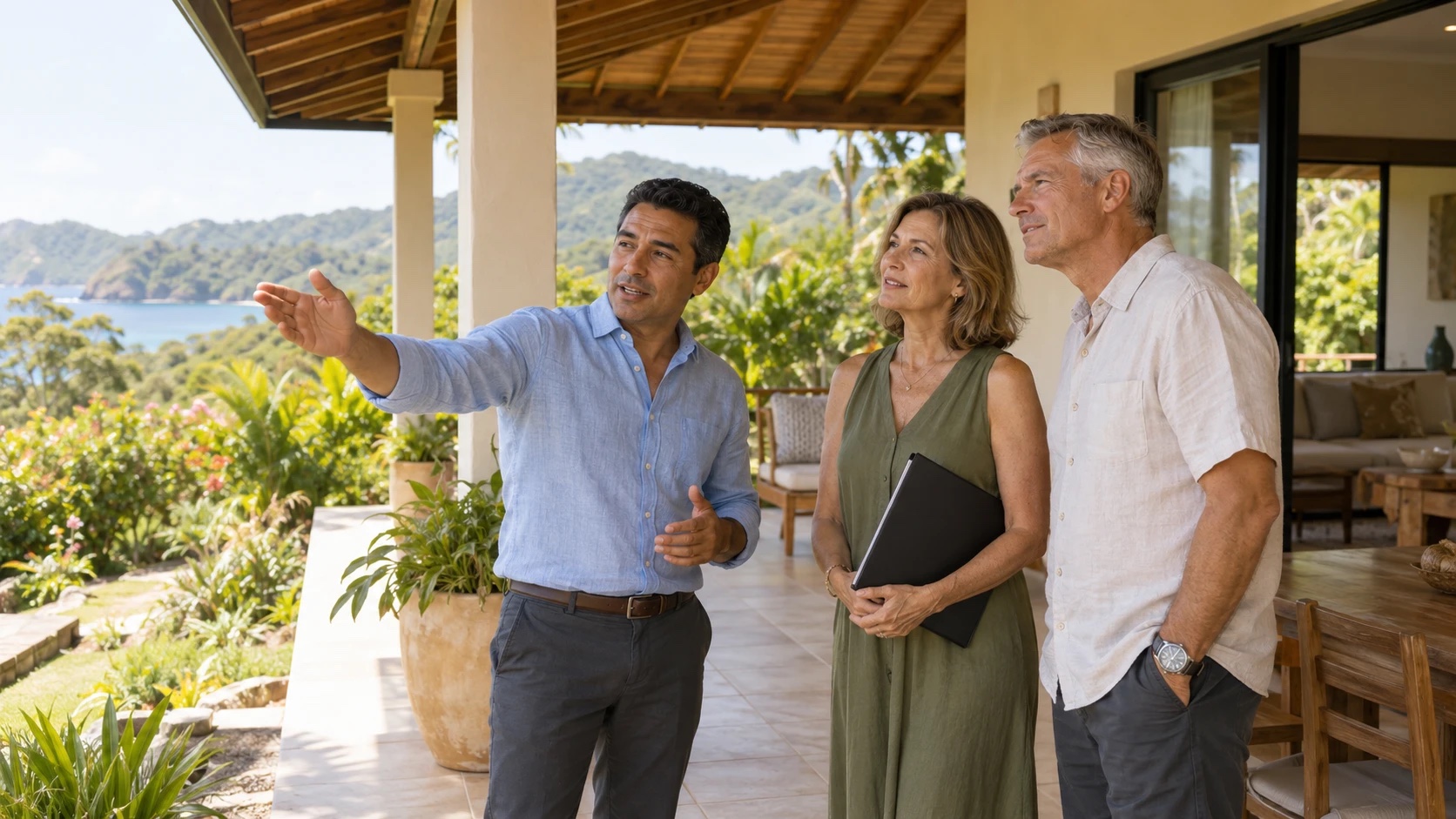
Living and working in Coco means I can do things that simply aren't possible from a distance:
- Walk the property at different times of day and in different weather, including after a heavy rain, to see how water moves.
- Talk to the administradora and the neighbors about how the community actually runs, which I cover in the post on HOA and condo fees.
- Pull the registry records and confirm the title, any liens, and the cadastral survey plan before money moves.
- Show you real comparable sales and price reductions, not just asking prices.
- Bring in local engineers, surveyors, and attorneys I've seen work on real deals, and know which developers and builders follow through.
- Check practical issues that never show up in photos, like water availability and road access in the rainy season. The water availability letter is a good example of something an outside advisor wouldn't even know to ask about.
How to Use Outside Advice Without Letting It Stall Your Purchase
- Ask your advisor for questions, not verdicts. Their concern is most useful as something specific to check.
- Send local attorneys the same documents you send to people at home, so the review is done by someone who knows the local system.
- Have any structural concern checked in person by an independent, licensed local engineer or architect, not judged from photos.
- Lean on home-country advisors for what they know best: your budget, your taxes, your financing, and your timeline.
- When you hear “that wouldn't pass back home,” ask “what is the local standard?” before reacting.
- Set a decision date with your local team, because good properties don't wait through a long round of second opinions.
- If you can, visit. Even a short trip changes the quality of every question you ask. Here's how to plan a house-hunting trip.
Where Advice From Home Really Helps
I don't want to overcorrect. Your advisors at home know things I don't: your tax situation, your estate plans, your risk tolerance, and how this purchase fits your life. A home-country accountant or attorney should absolutely weigh in on those. If buying without being here is the plan, read can you buy a house in Costa Rica without visiting?, and if you're deciding who represents you here, do you need a buyer's agent in Costa Rica? covers that.
Frequently Asked Questions
Can my real estate agent back home help me buy in Costa Rica?
They can help with things on your side of the border, like your budget, your financing options at home, and how a purchase fits your tax situation. They can't advise on Costa Rican property itself, because they don't work under its rules: there's no centralized MLS, closings run through a notario público instead of a title company, and land can be titled or concession. For anything about the property, the contract, or the market, you need someone who works here.
My friend is an engineer. Can they tell me if a Costa Rica property has structural problems from photos?
Not reliably. Photos and video can't show how a building was actually built, how the ground drains in the rainy season, or whether a crack is cosmetic or structural. Costa Rican construction also differs from what's common in the U.S. and Canada, with reinforced concrete block and columns far more common than wood framing, plus a seismic building code. Have a licensed local engineer or architect inspect the property in person, and let your friend review that report and ask questions about it.
Is it wrong to get a second opinion from someone back home?
No. A second opinion is healthy, and the people closest to you often ask good questions. The problem is when an opinion from someone who hasn't seen the property and doesn't know the local system becomes a verdict. Turn their concerns into specific questions, then get those answered by a local professional.
What should I do when outside advice contradicts what my local agent says?
Ask for the evidence behind each position. A local agent should be able to show you the registry records, recent comparable sales, the inspection report, and the contract language. If the outside advisor's concern is based on how things work back home, ask what the local standard is and have it confirmed by an independent local attorney or engineer.
Who should inspect a Costa Rica property before I buy?
A licensed engineer or architect registered with the CFIA, Costa Rica's professional association for engineers and architects, who is independent of the seller. For title and contract questions, use a local attorney you choose yourself. Your agent can recommend professionals, but the inspection report and legal review should come from people you hire directly.