Almost every buyer asks me about the price and the property tax before they ask about the HOA fee. That's backwards, in my opinion. On a condo or a home inside a gated community, the monthly fee is money you're committed to for as long as you own the place, and it can swing more than the property tax does. Here's how it actually works in Guanacaste: what you're paying for, what's typical, and how to tell if a community is being run well before you sign anything.
What Guanacaste Calls an "HOA Fee"
Costa Rica doesn't have homeowners' associations in the U.S. or Canadian sense. What buyers usually mean by "HOA fee" is the cuota de mantenimiento, the common-expense fee charged under Costa Rica's condominium law, the Ley Reguladora de la Propiedad en Condominio (Law 7933). This law applies to any project registered as a condominium regime, whether that's a beachfront tower, a gated community of individual houses, or a small complex of a few units, and it's what sets the legal framework for how common expenses get budgeted, collected, and enforced. If a property isn't registered as a condominium, there's technically no legal HOA at all, though some non-condominium neighborhoods still run an informal, voluntary fee for shared road maintenance or a gate guard.
Typical Monthly Fee Ranges
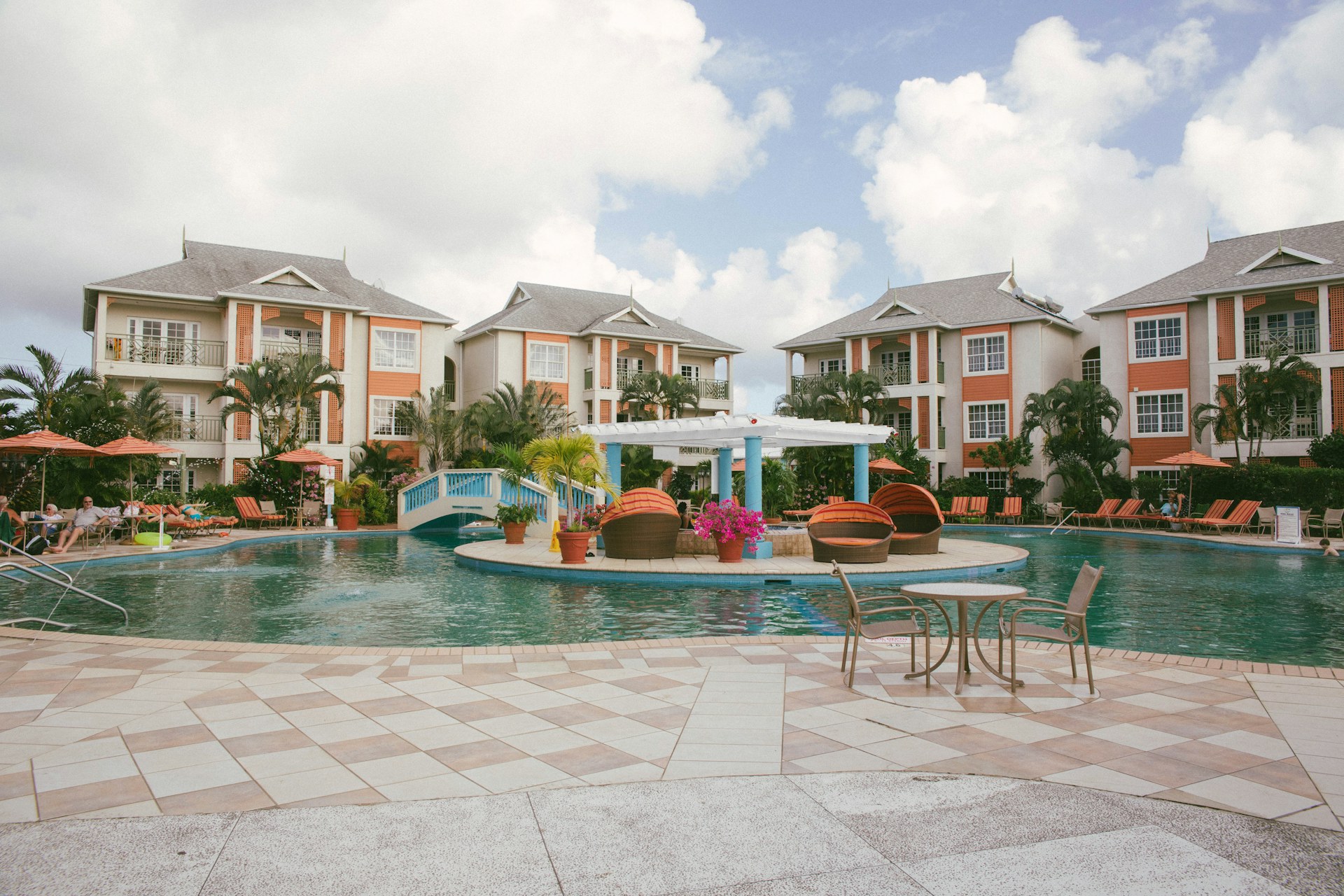
Fees vary more by community than by property type, but a few real, published numbers give a sense of the range. Tucanes 5, a two-bedroom condo close to the beach and downtown Coco, carries a fee of $250/month. Several units at Aquamarine and at Las Palmas run $175/month. Those are real, published figures, not estimates, and they're fairly representative of a modest, well-run beach-town condo with a pool and basic landscaping.
From there, the range widens:
- Beach-town condo, basic amenities (pool, shared laundry, light landscaping): roughly $150–$300/month, based on real listings.
- Gated community with more amenities (24-hour guardhouse, more extensive grounds, sometimes a clubhouse or tennis court): an estimated $300–$600/month, since fees here depend heavily on staffing levels and acreage.
- Standalone home, no condominium regime: $0 in legal HOA fees, though it's worth asking whether the neighborhood collects a voluntary road or security contribution.
Treat anything above as a starting range, not a quote. The only number that matters for a specific property is the one in that community's current, audited budget.
What HOA Fees Typically Cover
In a well-run Guanacaste condominium, the monthly fee usually covers: security staff and the guardhouse, landscaping and upkeep of common areas, pool cleaning and chemicals, trash collection, common-area electricity and sometimes shared water, the administradora's management fee, and a contribution toward the reserve fund for larger repairs down the road. Some communities also bundle in common-area insurance. What's actually included differs enough from one community to the next that I'd never assume; ask for the itemized budget before you assume anything is or isn't covered.
What They Don't Cover
The fee is for common property, not yours. It won't cover repairs or maintenance inside your own unit (a leaking water heater, interior painting, appliance repairs), your personal contents or liability insurance, or your annual municipal property tax, which you pay directly to your local municipality (the muni) regardless of what the HOA collects. If you're renting the place out, property management, cleaning between guests, and platform fees are separate costs on top of the HOA fee.
How Condo Administration Actually Works
Every registered condominium is run by an administradora (an individual or management company appointed by the owners) who handles day-to-day operations, collects fees, and carries out what the assembly of owners decides. Owners are required to hold at least one assembly per year, and each owner's vote is weighted by their unit's share of the condominium's registered value, not one vote per owner. Routine matters pass by simple majority; bigger structural decisions need a two-thirds vote, and changing what the property is used for needs unanimous consent. One detail that surprises a lot of buyers: Law 7933 doesn't set a required reserve-fund percentage. It defines what counts as a common expense and gives the community legal tools to collect unpaid fees (including a lien against the unit, second in priority only to unpaid property tax), but whether a community actually sets money aside for a new roof or a repaved parking area is entirely up to that assembly's own decisions and discipline. In practice, a meaningful share of smaller Guanacaste HOAs run with little or no real reserve fund, which is exactly why the next section matters.
Due-Diligence Checklist Before You Buy Into an HOA
- Get the current, board-approved annual budget in writing, not a verbal fee quote.
- Ask for the last two years of financial statements, not just this year's.
- Ask what the reserve fund balance actually is, and whether it's grown or shrunk recently.
- Ask directly whether any special assessment is planned, pending, or already been discussed at the last assembly.
- Ask what percentage of owners are currently behind on fees, and for how long.
- Ask whether the community, the administradora, or any owner is currently in litigation.
- Get the minutes from the last two or three owner assemblies, not just a summary.
- Confirm exactly what the fee includes (water, common electricity, insurance) versus what's billed to you separately.
- Build a due-diligence period into your offer long enough to actually review all of the above.
Red Flags to Watch For
A few patterns should slow you down: a reserve fund that's near zero on a building older than ten years, an administradora who's reluctant to share financials before you've made an offer, minutes that reference a "special assessment under discussion" without a resolution, a noticeably high number of delinquent owners, or any hint of active litigation between the community and a contractor, an owner, or the administradora itself. None of these automatically kill a deal, but each one is a reason to negotiate, budget for a likely special assessment, or walk away.
Factoring HOA Fees Into Your Total Cost of Ownership
The HOA fee is one line item in a bigger picture. Once you're comparing properties seriously, you'll want to weigh the monthly fee against the property's annual property tax and against your realistic monthly cost of living in Guanacaste, since a lower purchase price with a high HOA fee can end up costing more per year than a pricier property with a modest one. I usually walk buyers through this side by side, condo by condo, once we've narrowed down a shortlist. If you're weighing a finished condo against a custom build with no HOA at all, my building vs. buying guide covers that trade-off in more depth. And if the plan is to rent the place out, HOA rental restrictions are worth checking early, since some communities cap short-term rentals or require registration.
Frequently Asked Questions
What's a typical HOA fee in Guanacaste?
It varies widely by property type. Beach-town condos here often run $150–$300/month — Tucanes 5 is $250/month, and units at Aquamarine and Las Palmas are $175/month. Gated communities with more staff and amenities typically run an estimated $300–$600/month, and a standalone home with no HOA has $0 in condo fees, though some neighborhoods still charge a smaller road or security fee.
What do condo or HOA fees actually cover in Costa Rica?
Most fees cover security and guardhouse staff, landscaping and common-area upkeep, pool maintenance, trash collection, and a portion set aside for the reserve fund. Some communities also bundle in shared water or common-area electricity. Coverage varies by community, so always ask for the fee breakdown in writing.
What isn't covered by HOA fees?
HOA fees don't cover repairs or maintenance inside your own unit, your personal property insurance, or your annual municipal property tax, which you pay directly to your local municipality regardless of what the HOA collects.
Does Costa Rican law require condos to keep a reserve fund?
No. Law 7933, the Ley Reguladora de la Propiedad en Condominio, sets out how common expenses are budgeted and collected, but it doesn't mandate a specific reserve-fund percentage. Whether a community actually saves for major repairs comes down to the assembly of owners and the administradora, which is exactly why checking the reserve fund balance during due diligence matters so much.
What should I ask before buying into an HOA?
Ask for the current approved budget, the last two years of financial statements, the reserve fund balance, minutes from recent owner assembly meetings, and whether any special assessments are planned or pending. Also ask directly whether any owners are delinquent on fees, since unpaid dues can lead to liens against the unit.