Almost every buyer who calls me about Guanacaste eventually asks some version of this question: "Should we be looking at Coco, or should we be looking at Tamarindo or Flamingo instead?" It's a fair question, and there isn't one right answer for everyone. These are three genuinely different towns, and the honest comparison depends less on which one is "best" and more on what you're actually trying to do: live here full-time, generate rental income, or own the beach house you pictured on Pinterest.
Playas del Coco: The Real, Working Town
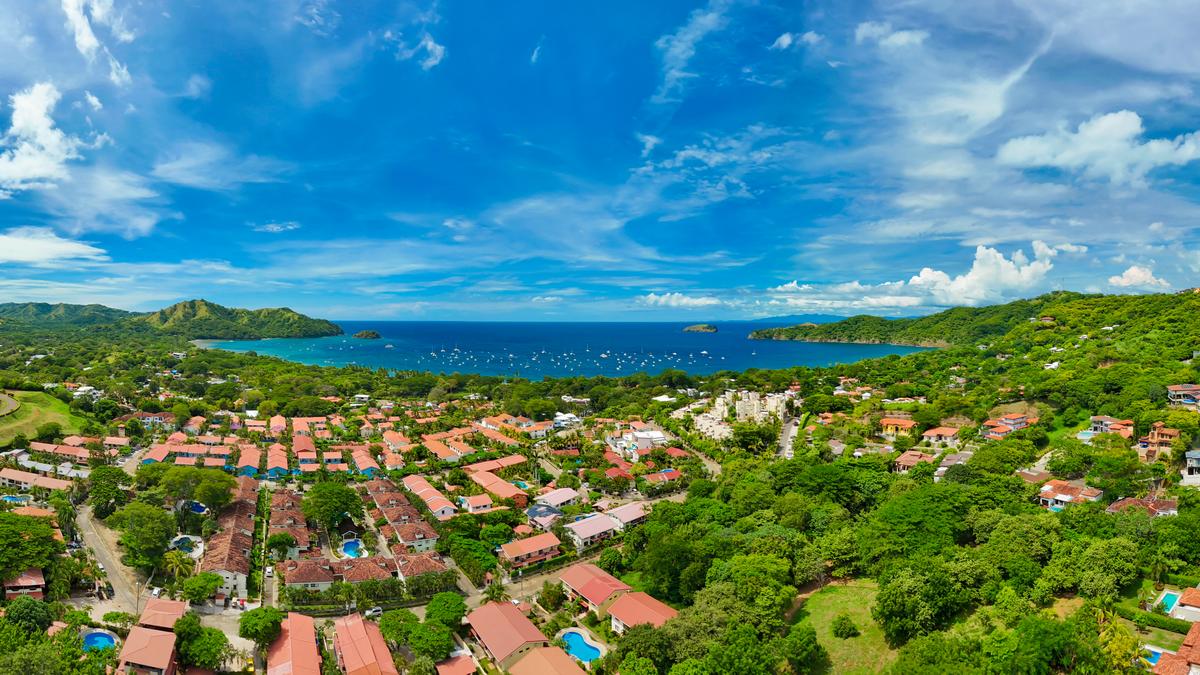
Coco is a full-time, lived-in town, not a resort built for tourists. It has a working boat launch that still sends out sportfishing and diving boats every morning, a long strip of restaurants and bars you can walk to from most condos downtown, grocery stores, pharmacies, banks, and the largest, most established expat community on this stretch of coast. It's also the most walkable of the three towns by a good margin: you can genuinely live here without a car if you choose the right building. That combination of infrastructure and affordability is why it tends to attract retirees and full-time residents who want to actually belong to a community, not just visit one. For a deeper look at day-to-day life here, see my Playas del Coco town guide and an honest take on safety. If you want to see what's actually on the market, browse my featured listings, including Bromelias 5, a two-bedroom condo downtown, and Tucanes 5, a bay-view condo a short walk from the water.
Tamarindo: Guanacaste's Biggest Tourist Engine
Tamarindo is the town most people picture when they imagine Costa Rica's Pacific surf scene: a long beach break, a dense cluster of restaurants, bars, surf shops, and yoga studios, and by far the most nightlife of the three towns. It draws the heaviest tourist traffic in Guanacaste, which is exactly why it also draws the most vacation-rental and Airbnb demand. That popularity comes at a cost: more built-up development, more congestion in high season, and generally the highest asking prices per square meter of the three towns, especially in the walkable central core. It's a legitimate option for buyers chasing rental income or the energy of a bigger beach town, but it's a busier, more built-up place than Coco, and it doesn't carry the same year-round, lived-in feel.
Playa Flamingo: Upscale, Marina, Quieter
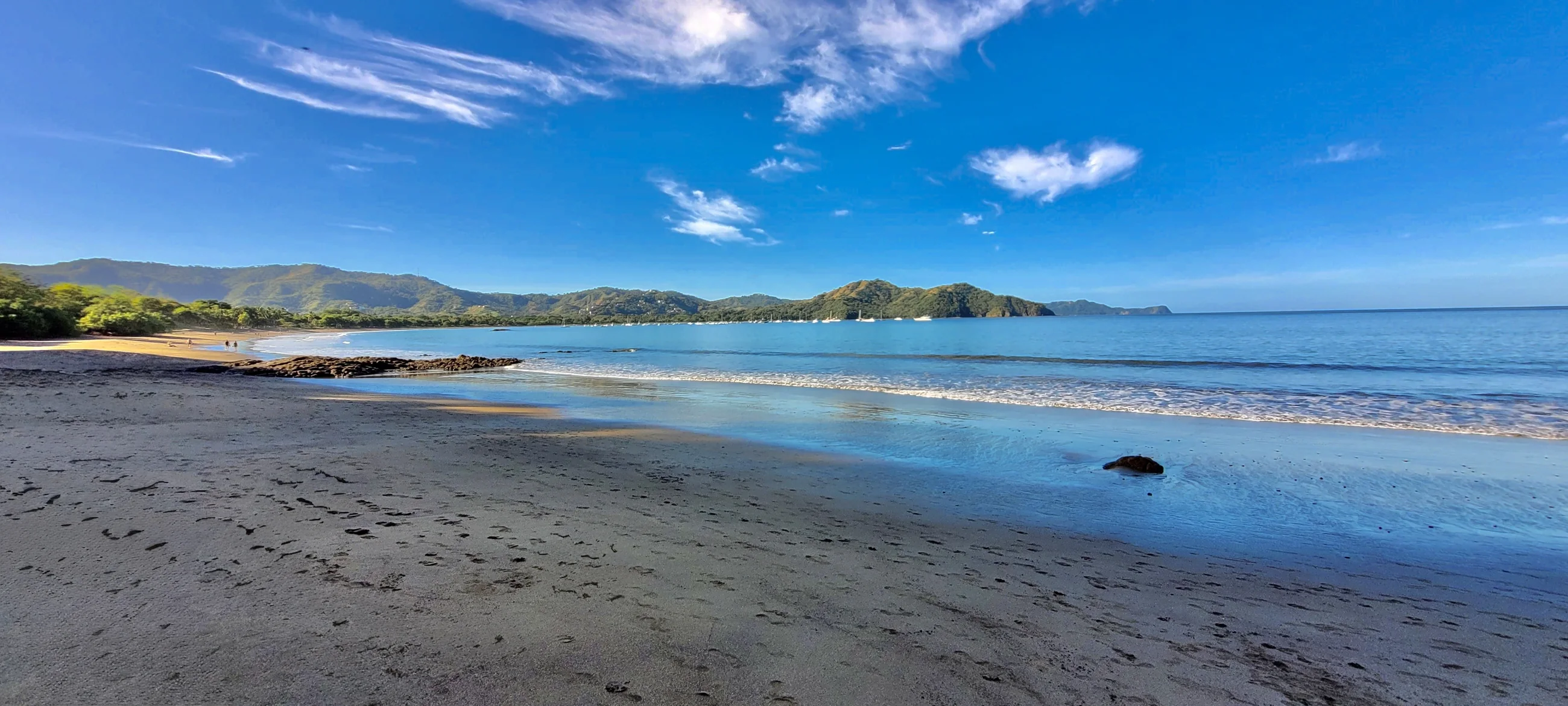
Flamingo sits at the upscale end of this comparison: a marina town with sportfishing charters, a small cluster of higher-end condos and homes, and generally the highest price point of the three. It's noticeably quieter than Tamarindo, without the nightlife or foot traffic, but it also doesn't have Coco's full-time, walk-everywhere town center; it feels more like a collection of residential and vacation properties around the marina than a complete community. Flamingo is also, per my own post on what Guanacaste's beaches actually look like, the closest of the three to the pale, "white sand" look buyers picture from postcards, so I won't repeat that detail here beyond pointing you to it.
Price Positioning: Relative, Not Exact
I want to be careful here rather than invent numbers I can't stand behind. Public market reports on Guanacaste condo and villa pricing put the average asking price across Tamarindo, Flamingo, and Coco somewhere around $4,200 USD per square meter for condos as of early 2026, with premium units in the strongest neighborhoods running $3,000 to $5,500 USD per square meter. Within that range, Coco, and downtown Coco in particular, is consistently described as one of the more affordable entry points on this coast, with older condo buildings starting in the $120,000 to $180,000 range. Tamarindo's walkable central core and Flamingo's premium beachfront units sit toward the higher end, with some three-bedroom oceanfront condos in Flamingo listed above $1,000,000. Treat all of this as an estimate built from public market reports, not an appraisal: individual buildings, views, and finishes swing these numbers a lot in either direction.
Side-by-Side Comparison
Rental and Investment Potential
All three towns rank among Guanacaste's stronger-performing rental markets, generally cited in the 7% to 12% gross annual yield range depending on the property and how it's managed, though actual results vary widely by unit, management quality, and how a listing is marketed. Tamarindo tends to post the highest average daily rates and occupancy in high season, thanks to being the most walkable to restaurants, surf, and nightlife, but it also has the most competing inventory and the highest purchase price to recoup. Playas del Coco generally offers a lower entry price and steady, lower-maintenance, mid-range demand, which can make the yield math work out just as well, or better, on the money actually invested, even with lower nightly rates. Flamingo commands some of the highest nightly rates of the three from families and groups wanting a quieter, upscale stay, but the higher purchase price and smaller inventory of premium units mean the yield calculation depends heavily on the specific building. None of these figures should replace a property-specific projection; ask for one before you buy based on rental income assumptions.
Infrastructure and Getting Around
Coco has the most complete day-to-day infrastructure of the three: full-service grocery stores, medical clinics, banks, and a genuine town center you can walk without a car. Tamarindo has similarly dense infrastructure within its core, but the tradeoff is more traffic and congestion, especially during high season and holiday weeks. Flamingo's infrastructure is smaller and more spread out around the marina, with less of a compact walkable center than either Coco or Tamarindo, though what's there tends to be higher-end. All three are reachable on paved roads from Liberia in a standard rental car; no 4x4 is required for any of these routes in normal conditions.
Who Each Town Actually Fits
If you want a real, year-round community, easy walkability, and the most straightforward path to feeling like a local rather than a visitor, Coco tends to fit best, especially for retirees and full-time residents. For more on why buyers keep choosing this stretch of coast, see my post on why Guanacaste is Costa Rica's fastest-growing region and my broader Guanacaste Coast area guide. If you're chasing top-line rental yield and don't mind a busier, more built-up environment, Tamarindo's booking demand is hard to match, though Coco can be the more cost-effective play for steady returns. If the classic white-sand, upscale postcard look matters most to you, and you don't need a full-time town center at your doorstep, Flamingo is usually where I'd send you first, alongside nearby Playa Conchal.
Frequently Asked Questions
Is Playas del Coco cheaper than Tamarindo?
Generally, yes. Public market data consistently places Coco, especially its older downtown condo buildings, among the more affordable entry points on this coast, while Tamarindo's walkable central core commands some of the highest per-square-meter prices in Guanacaste. These are relative positions based on published market reports, not appraisals of specific units.
How far is Tamarindo from Liberia International Airport?
Roughly 60 to 75 minutes by car in normal traffic, covering about 65 to 75 kilometers. Playas del Coco is closer, around 30 to 35 minutes, and Playa Flamingo is in between at roughly 45 to 60 minutes, though all three vary with road conditions and time of year.
Which town has the best rental income potential?
It depends on what you're optimizing for. Tamarindo generally sees the highest daily rates and booking demand thanks to its walkable restaurant and surf scene, but also the highest purchase price and the most competition. Playas del Coco tends to offer a lower entry price and steady, lower-maintenance mid-range demand, which can produce a comparable or better yield on the money invested. Flamingo sits at a higher price point with premium rates from families and groups seeking a quieter, upscale stay.
Is Flamingo worth the higher price compared to Coco?
That depends on your priority. If the classic pale-sand, upscale-marina look and a quieter atmosphere than Tamarindo matter more to you than year-round community life or price, Flamingo is usually worth the premium. If you want the most walkable, most affordable, most lived-in town on this coast, Coco tends to make more sense.
Does Juan Pablo Lacayo work in Tamarindo and Flamingo?
Juan Pablo's day-to-day expertise is centered on Playas del Coco, Ocotal, Hermosa, and Playa Panamá, where he lives and works daily. His comparisons of Tamarindo and Flamingo are based on public market data and general market knowledge rather than the same on-the-ground familiarity, and he recommends working with a local specialist for a deep dive if your search is centered on those towns specifically.