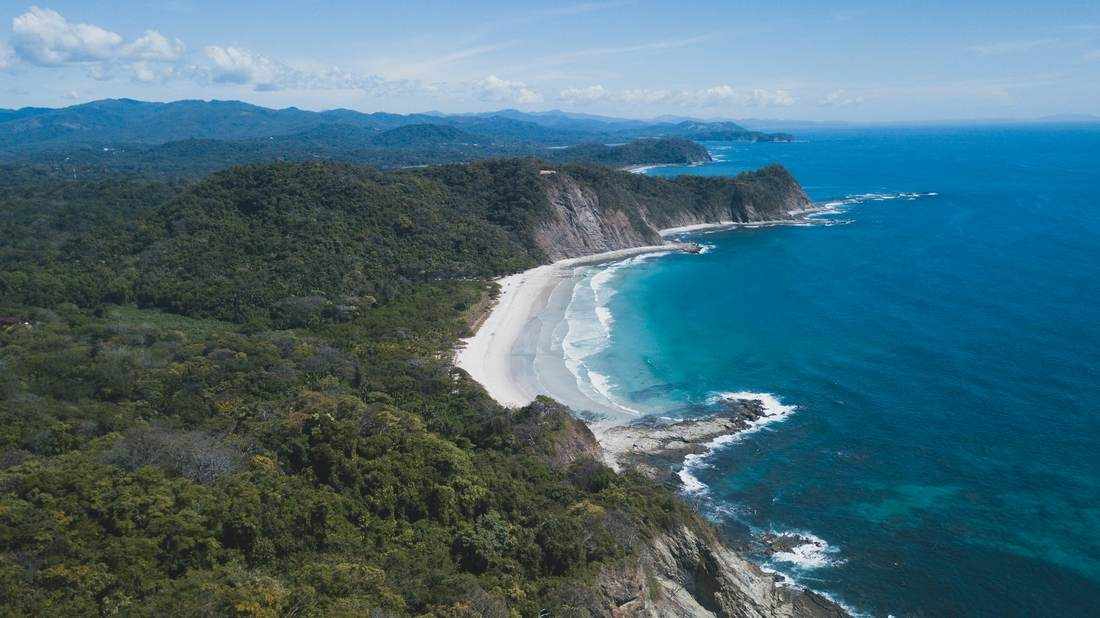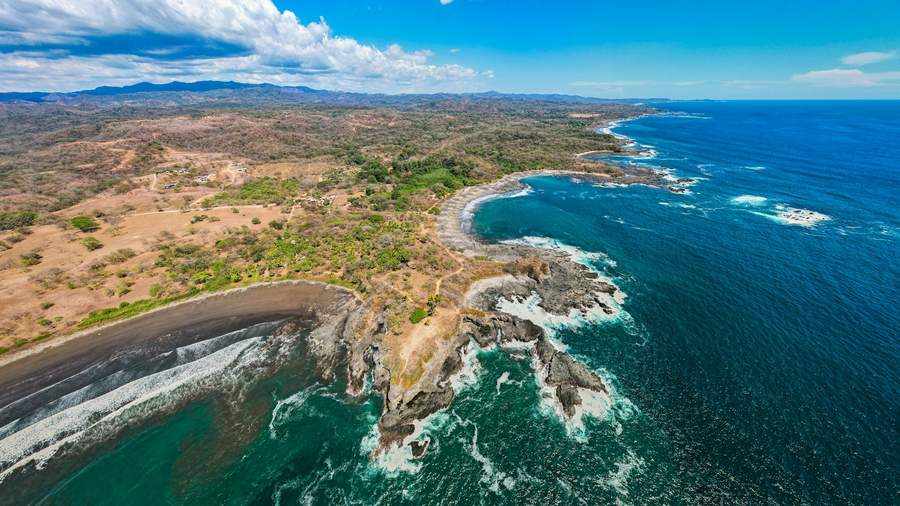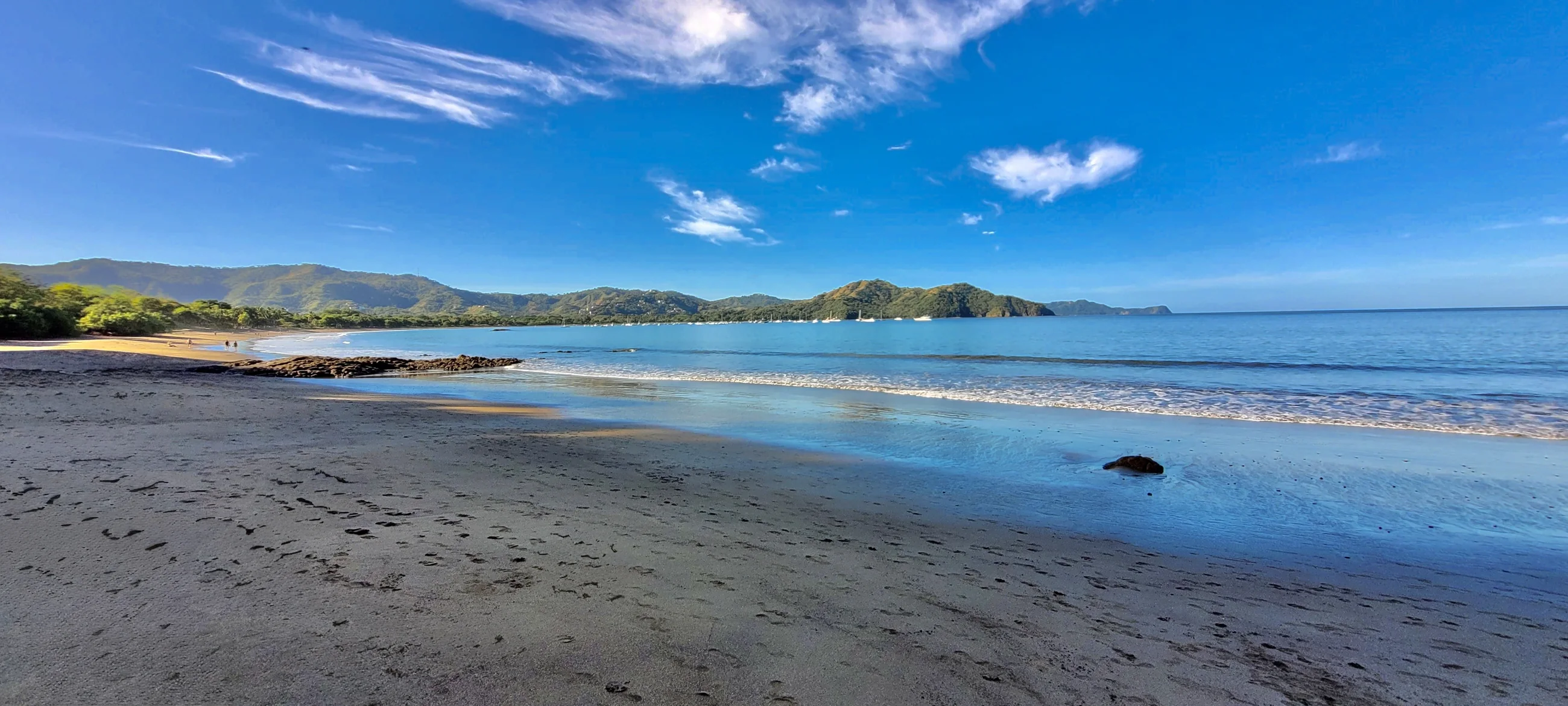
It's one of the most common conversations I have with buyers before they've even booked a flight: "We want a beach with soft, white sand, like Naples, and clear blue water." It's a completely reasonable thing to want. It's also, for this stretch of coast, one of the easiest expectations to get wrong from photos alone. Guanacaste has some genuinely beautiful beaches, several of them Blue Flag certified for water quality, but almost none of them look like Florida or a Caribbean brochure. Here's the honest version, beach by beach.
Why Pacific Coast Sand Isn't Caribbean Sand
The soft, powdery white sand people picture from Naples or the Caribbean is usually made of finely ground coral and marine limestone, built up over thousands of years in calm, coral-reef-lined waters. Costa Rica's Pacific coast has a different geologic story: it's a volcanic coastline, shaped by rivers carrying mineral sediment down from inland mountains and by a more active ocean swell. The result is sand that runs anywhere from pale tan to a deep, almost charcoal gray, depending on the beach and the mineral content nearby. Neither is "better" sand, it's just a different origin, and it means most of Guanacaste won't match a mental image built on Caribbean or Gulf Coast photos.
What Blue Flag Certification Actually Means
This is the part that trips people up the most. Bandera Azul Ecológica, Costa Rica's Blue Flag program, is one of the most respected beach-quality ratings in the world, but it has nothing to do with sand color. It scores water quality, safety, waste management, and environmental stewardship, awarded in stars, up to five. A beach with dark volcanic sand can carry the exact same rating, or a higher one, than a beach with pale sand nearby. If clean, safe, well-managed water is the priority, Blue Flag is the number to look at. If sand color is the priority, you have to check that separately, beach by beach.
Playa Conchal: White, But Not Sand
Playa Conchal is the beach most people mean when they've seen a Guanacaste "white sand" photo online, and it's genuinely striking in person. But it's worth knowing what's actually underfoot: Conchal's beach is made almost entirely of crushed seashells, not mineral sand. "Conchal" comes from concha, Spanish for shell. From a distance, and in photos, it reads as bright, almost blinding white. Up close, it's coarser and crunchier than sand, more like walking on fine gravel in places. It also happens to carry the highest Blue Flag rating of the beaches in this area, four stars, so the water quality living up to the postcard is real. There's no direct vehicle access to the beach itself: reaching it typically means parking in the town of Brasilito and walking 15 to 25 minutes along the sand, unless the property you're looking at has private beach club access.
Playa Flamingo: The Closest Match to "White Sand"
Of the beaches in this part of Guanacaste, Playa Flamingo comes closest to the soft, pale sand people picture when they say "white sand beach." It's also Blue Flag certified, walkable from a real town center with restaurants, a marina, and a mix of condos and homes, and it has become one of the more established, higher-demand beach towns on this coast, which shows up in property prices. If matching that mental image matters more than anything else, Flamingo is usually where I point buyers first.
Playa Ocotal and Playa Hermosa: Blue Flag, Volcanic Sand
Playa Ocotal and Playa Hermosa are both Blue Flag certified, both a short drive from Playas del Coco, and both genuinely beautiful, calm, protected bays with good swimming and snorkeling. Neither has white sand. Both have the darker, volcanic sand typical of this coastline, sometimes almost black in certain light. What they trade white sand for is a quieter, more residential feel and, generally, a more accessible price point than Flamingo or Conchal for a similar size home.
So What Should You Actually Do With This?
None of this means Guanacaste isn't worth it, it means "white sand" is doing a lot of work in a lot of marketing photos, and it's worth separating that from water quality, walkability, and price before you fall in love with a listing photo. My honest recommendation to almost every buyer chasing this look: come see the beaches in person before you commit to a neighborhood. Photos, including mine, compress a lot of nuance out of sand color and texture. A short visit, walking each beach barefoot, tells you more in an afternoon than a month of scrolling.
Frequently Asked Questions
Does Costa Rica have white sand beaches?
Not in the powder-white, Caribbean-island sense. Guanacaste's Pacific coast sand ranges from pale tan to dark volcanic gray, depending on the beach. Playa Flamingo comes closest to a true white-sand look. Playa Conchal appears white from a distance, but that color comes from crushed seashells, not sand.
Why does Playa Conchal look white if it isn't sand?
Playa Conchal's beach is made of millions of small, broken shell fragments rather than mineral sand grains. From a distance and in photos it reads as bright white, but underfoot it feels coarser and crunchier than fine sand.
What does Blue Flag certification actually measure?
Bandera Azul Ecológica (Blue Flag) rates water quality, safety, and environmental management, not sand color or texture. A beach with dark volcanic sand can hold the same or a higher Blue Flag rating than one with pale sand.