"How much do I actually need per month?" is the question I hear most from people thinking about Coco. The honest answer is that it depends far more on how you live than on where you live, so instead of one average number, here are three real budgets for a couple in or around Playas del Coco, with the line items I see people actually paying. If you want the bigger relocation picture first (residency, where to live, getting settled), start with my guide to moving to Costa Rica.
All figures are approximate 2026 estimates for a couple, in US dollars, because that is how rent, condo fees and most bigger costs are quoted locally. Canadian dollar amounts use C$1.41 per US$1 (market rate on September 28, 2026) and are rounded; colón amounts use about ₡452 per US$1 (Banco Central de Costa Rica reference rate, late September 2026). Prices change with the season, the neighborhood and the exchange rate, so treat these as planning ranges, not quotes.
Three Budgets at a Glance
Modest Budget: About $1,800–2,200 a Month
A couple renting a one- or two-bedroom condo or small house a little inland or a few blocks back from the beach, cooking most meals, using A/C mainly at night, and getting around without a car (buses, taxis, the odd rental). It is a realistic way to test the area for six to twelve months before committing. Worth knowing: the $1,000-a-month pension minimum for Pensionado residency is an immigration threshold, not a living budget.
Comfortable Budget: About $3,000–3,800 a Month
A two-bedroom condo closer to the beach, usually in a complex with a shared pool, a used car, regular groceries with some imported favorites, dinners out a few times a week, and a cleaner once a week. This is the most common picture I see among couples who settle in Coco full time.
Upscale Budget: About $5,500–7,500+ a Month
An ocean-view home or a house with a private pool, A/C running most of the day, near full-time household help plus pool and garden service, private health insurance, and eating out often. At this level, costs start to look like a comparable lifestyle in the US or Canada. The difference is the climate and the pace, not the price.
The Three Budgets, Line by Line
| Monthly cost (US$) | Modest | Comfortable | Upscale |
|---|---|---|---|
| Housing (rent) | 800–1,000 | 1,400–1,800 | 2,700–3,500 |
| Electricity | 60–110 | 150–250 | 250–450 |
| Water & garbage | 20–30 | 25–40 | 40–60 |
| Internet & phones | 50–70 | 70–90 | 100–120 |
| Groceries | 475–500 | 575–625 | 700–950 |
| Eating out | 120–150 | 250–300 | 400–600 |
| Transport | 100–120 | 200–225 | 260–400 |
| Healthcare | 100–120 | 150–220 | 300–450 |
| Household help | – | 80–100 | 650–820 |
| Personal & misc. | 75–100 | 100–150 | 100–150 |
| Total (US$) | 1,800–2,200 | 3,000–3,800 | 5,500–7,500+ |
| Total (C$, at 1.41) | 2,550–3,100 | 4,250–5,350 | 7,750–10,600+ |
Approximate monthly costs for a couple, US dollars, 2026. Transport assumes no car in the modest budget and a car you already own in the others.
Housing: Renting vs. Owning
Housing is the line that moves everything else. Long-term rents in Coco are generally lower than in Tamarindo, where a one-bedroom in the center averages close to $1,950 a month in current cost-of-living data. High-season short-term rates are a different market entirely, so negotiate a long-term rate directly with the owner.
Owning swaps rent for a smaller set of carrying costs. As a real example, Tucanes #5, a bay-view condo in Coco listed at $209,000, has condo fees of $250 a month, which cover the shared pool and common areas. Municipal property tax is 0.25% of the registered value, so a condo registered near that price pays roughly $520 a year, about $45 a month. Add home insurance and a maintenance reserve, and my property tax guide covers the luxury home tax that applies only above a construction-value threshold. If you are weighing the two paths, renting vs. buying in Guanacaste walks through the timeline logic, and my featured listings, including Bromelias 5, a two-bedroom condo in Coco, show what is on the market right now.
Utilities: Electricity, Water and Internet
Electricity in Coco comes from Coopeguanacaste, the regional cooperative, not ICE (which serves other parts of the country). Under its 2026 residential rate, a small home using about 250 kWh a month pays roughly ₡18,600, around $40. The catch is air conditioning. Coco is hot and dry from December to April, and running a couple of split units through the dry season commonly takes a two-bedroom condo to $150–250 a month, with larger homes, pools and big west-facing windows going well past that. Shade, cross-breeze and inverter A/C matter almost as much as size, so ask to see recent electric bills before you sign a lease or an offer.
Water comes from AyA's Sardinal–El Coco–Ocotal system and is usually modest, often $20–40 a month and sometimes included in condo fees; late in the dry season, a storage tank is worth having. Fiber internet is widely available in town and typically runs $50–70 a month, plus about $10–25 per person for a mobile plan.
Groceries and Eating Out
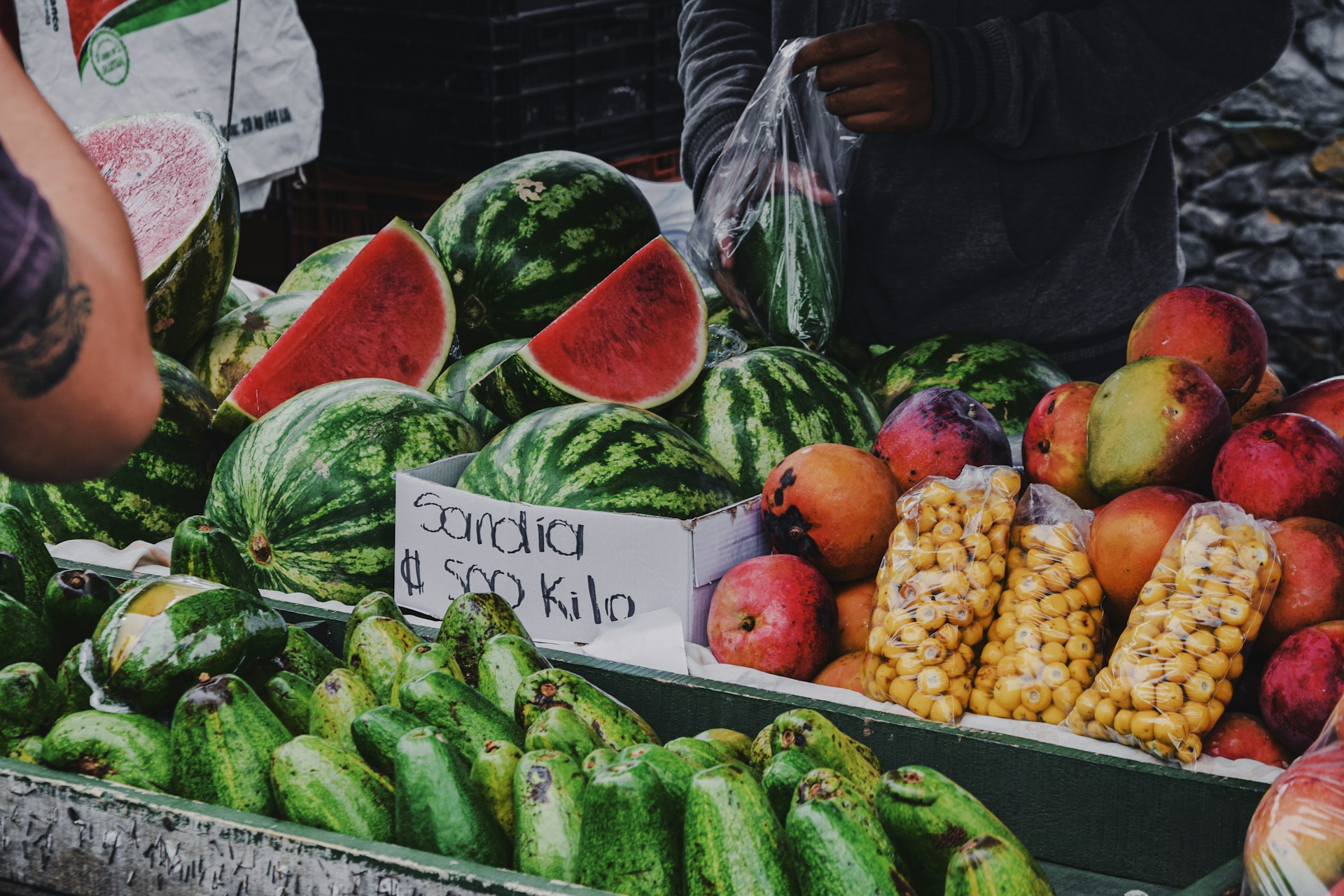
This is where "local vs. imported" shows up fastest. Coco has several supermarkets, from budget chains like Maxi Palí and Mega Super to the full-service Auto Mercado with its imported aisle and wine selection. Rice, beans, eggs, chicken and whatever fruit is in season are reasonable; cereal, wine, specialty cheese and name-brand snacks from home can cost dramatically more than you would pay in the US or Canada. There is a small Sunday market in Coco, and the larger ferias (farmers' markets) in Liberia and the inland towns are worth a monthly trip if you have a car.
Eating out follows the same rule. A casado at a local soda is still one of the best-value meals around; a beachfront dinner with drinks is priced like a nice restaurant back home.
Getting Around: Cars, Gas and the Marchamo
Cars are one of the few things clearly more expensive here. Import taxes run about 52% of the vehicle's value for cars up to three years old, about 64% for four to five years, and about 79% for six years and older, calculated on the higher of your invoice (with shipping and insurance) or the Finance Ministry's reference value. That valuation rule has been enforced more strictly this year, and individuals can import only one vehicle per year. Most people I work with buy a used car locally instead.
Gas is price-regulated nationwide: in September 2026, about ₡726 a liter for super and ₡707 for regular, roughly $1.60 a liter or about $6 a gallon. Every car also pays the annual marchamo, the circulation tax and mandatory insurance due by December 31, which varies with the car's fiscal value but is commonly a few hundred dollars a year for a typical used SUV. The comfortable budget's transport line covers gas, insurance, the marchamo spread over twelve months and routine maintenance, not the car itself.
Healthcare
Legal residents must join the Caja, the public system, paying a monthly contribution based on declared income (commonly cited at 7–11%). Many couples add a private policy or pay out of pocket for private specialists, which is why the healthcare line grows from budget to budget. I explain how the two systems fit together in Caja vs. private health insurance, so I won't repeat it here.
Household Help
Help at home is one of the real savings. A weekly cleaner fits the comfortable budget. For a regular employee, the 2026 legal minimum for full-time domestic work is about ₡268,600 a month (roughly $590), and as an employer you also register them with the Caja, pay employer social charges and the aguinaldo (a thirteenth-month bonus), and respect vacation and holidays. Budget roughly a third on top of the wage, and do it properly from day one; it protects both of you.
The "Gringo Trap": Importing Your Old Life
The budgets that blow up are the ones that try to recreate life at home: a shopping cart full of familiar imported brands, A/C running all day with the doors open, a new car, eating mostly at tourist-priced spots on the beach, shipping furniture and appliances down. None of that is wrong, but it quickly turns a $3,000 month into a $5,000 one. The strong colón adds a quieter squeeze: at about ₡452 to the dollar, anything priced in colones (electricity, gas, the feria, wages) costs more in dollar terms than it did a few years ago. Live a bit more like your neighbors and the numbers work in your favor.
How Coco Compares
Coco is generally more affordable than Tamarindo, where tourism has pushed up rents and restaurant prices. Central Valley towns like Atenas or Grecia can be cheaper still, with two-bedroom rentals often cited at $500–900 a month and a climate that needs little A/C, but you give up the beach and having Liberia airport about 30 minutes away. If you are only planning to come for the winter, my Costa Rica vs. Mexico snowbird comparison looks at season-length budgets, and my Playas del Coco town guide covers what daily life here actually feels like.
Frequently Asked Questions
How much does it cost to live in Playas del Coco per month?
For a couple, a modest budget runs about $1,800 to $2,200 a month (roughly C$2,550 to C$3,100), a comfortable one about $3,000 to $3,800 (C$4,250 to C$5,350), and an upscale one $5,500 to $7,500 or more (C$7,750 to C$10,600). These are approximate 2026 estimates; housing and air conditioning cause most of the difference.
Is Costa Rica cheaper than the US or Canada?
Often yes for housing, household help, local food and property tax, but not across the board. Cars, gas, electricity with heavy A/C use and most imported products can cost as much as or more than at home, so the answer depends on how you choose to live.
How much is electricity in Playas del Coco with air conditioning?
Coco is served by Coopeguanacaste. A small home using about 250 kWh a month pays roughly 18,600 colones (around $40) at 2026 rates. Running A/C through the dry season commonly pushes a two-bedroom condo to $150 to $250 a month, and larger homes with pools go higher.
Should I bring my car to Costa Rica or buy one there?
Most people I work with buy locally. Import taxes run roughly 52% to 79% of the vehicle's value depending on its age, calculated on the higher of your invoice or the Finance Ministry's reference value, so shipping a car down rarely saves money.
What is the biggest surprise expense for newcomers?
Imported goods. Appliances, car parts, wine, specialty cheese and name-brand snacks can cost far more than in the US or Canada because of import duties, and a strong colón makes colón-priced costs like electricity and wages dearer in dollar terms.