Costa Rican title records work differently from the title searches many buyers know from the United States or Canada. The good news is that the system is public and the basic record is cheap and quick to obtain. The risk is not the record itself; it is skipping the checks around it. This guide walks through what to verify, and who should verify it, before you sign anything.
Start With the Registro Nacional Record
The core document is the certificación literal, issued by the Registro Nacional. It certifies a property's registered characteristics, its owner, and its liens (gravámenes) and annotations (anotaciones). You request it using the property's finca (folio real) number, online or at a counter, it is delivered immediately, and the 2026 fee is ₡2,930. Attorneys also look for mortgages, easements and limitations on the record.
Other certifications are worth knowing about. The certificado catastral and the estudio registral are priced at ₡8,500 in 2026. The catastral certificate gives the survey plan and an aerial image alongside the registry data in areas that have been mapped. The registry also sells an owner history going back to 1994 and an index showing the properties a person or company holds.
Two practical rules: pull a fresh certification right before you sign, since the record changes, and ask your attorney to check for documents that have been presented but are not yet fully registered. The record is only a snapshot of a moment in time.
The Survey Plan Has to Match the Land
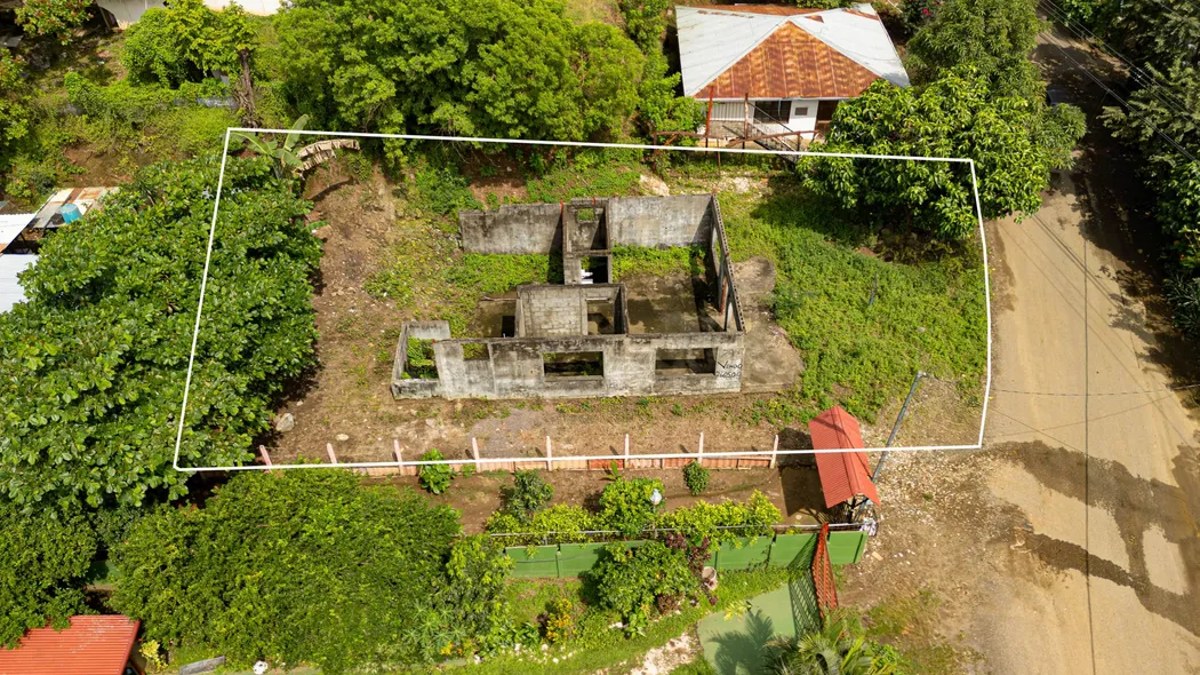
Every registered property is tied to a survey plan (plano catastrado) filed in the national cadastre, and the registry and the cadastre are meant to agree. Registration of documents that lack a registered plan is suspended, so a property without a proper plan can be stuck. Have your attorney compare the plan, the registry entry and the physical boundaries, and walk the land or have it surveyed if anything looks off. A mismatch can lead to boundary disputes, refused registration and problems getting building permits.
Legal Access
A property should have legal access, meaning frontage on a public road or a registered easement of passage. A right of way can be forced for an enclosed property under the Civil Code, with compensation, but it is not automatic, and it should be registered to bind third parties. "There's a dirt road" is not the same as legal access, so ask your attorney to confirm it in the record and on the plan.
Titled Land vs. Possession Rights
Some land is sold on the basis of possession rights (derechos de posesión) rather than registered title. Possession is not registered ownership. A possessor can go to court to register title, which generally requires more than 10 years of possession, including a predecessor's time, and a registered survey plan, and the registration is made without prejudice to a third party with a better right. Land that forms part of the state's natural heritage cannot be registered through this process. For most foreign buyers, the safe answer is to buy titled property, and to have an attorney explain any exception in detail.
Condos: Check the Fees and the Rules
For a condominium unit, the seller must give the notary a certification from the administrator that the common-expense fees are current. If fees are in arrears, the buyer becomes jointly liable for the certified amount, with a right to recover it from the seller. Unpaid fees, fines and interest are secured by a lien on the unit, second only to property tax. You are also bound by the condominium's existing bylaws, so read them before you buy. My guide to HOA and condo fees in Guanacaste shows what those fees usually cover.
Land Use, Building and Water
- Land use and permits. Municipal building permit applications generally require a certified land-use letter (uso de suelo), the registered survey plan and professionally stamped plans. Environmental viability (SETENA) is not a building permit by itself, and other permits are still required.
- Protection areas. The forestry law sets protection setbacks, such as 100 meters around permanent springs and 15 meters on each side of rivers and streams in rural areas, and generally does not allow changing the use of forested land. Rules on works in these zones have been contested in the courts recently, so rely on your attorney for the current position.
- Water. A water availability certificate comes from the water authority, municipality or local rural water association. It is a first requirement for a construction permit but does not itself authorize a connection. See the water availability letter guide.
- Near the ocean. The 200-meter maritime zone has its own rules, with the first 50 meters public and the rest available only by concession. See the maritime zone guide.
If the Seller Is a Company
Many properties are held in a Costa Rican corporation. Have your attorney verify the company's legal existence (personería jurídica), its legal representative and board, and any liens on its shares. Check that it is current with its annual corporate tax; for 2026 that was due January 31, and several consecutive unpaid periods can lead to dissolution. Companies must also report their beneficial owners to a central registry. If you buy the shares instead of the deed, you take on the company's liabilities along with the land, so the company itself needs its own due diligence. I cover the trade-offs in a corporation versus your own name.
Unpaid Taxes and Fees
Property tax debts attach to the property. The current owner is jointly liable for unpaid property tax, interest and surcharges, with a right to recover the amount from prior owners, and these debts rank as a preferred legal mortgage. Do not assume the registry checks whether taxes are paid. Ask for a municipal tax clearance, and have your attorney confirm what is owed. See property taxes: what owners actually pay.
Who Does What
- The notario público. Only attorneys can be notaries. The notary drafts the deed and files it for registration, and ownership becomes effective against third parties on registration. When the buyer pays cash, the buyer generally chooses the notary. See what a notario público actually does.
- Your independent attorney. Retain your own counsel, not the seller's, to read the record and run the checks in this guide.
- Your agent. I coordinate the process, flag anything unusual and keep the timeline moving, but I am not a substitute for your attorney. See whether you need a buyer's agent.
- Title insurance. It exists but is rarely used, and it is not built into the system. Ask your attorney whether it is worth exploring for your property.
Fraud Red Flags
Reported title-theft schemes have used forged documents, false identification and complicit notaries, and have targeted absent foreign owners of coastal properties. To protect yourself as a buyer, verify the seller's identity and their right to sell, pull a fresh certification right before signing, use your own attorney, and confirm the property is not inside the maritime zone or a protected area. If you already own a property, ask your attorney about registry alert services that notify you when a document is presented against your property; these are reactive, so they are a safety net, not a substitute for watching your property. Squatting is also a real consideration for vacant land, since possession can complicate an eviction, so visit and inspect before you buy.
Myths About Title in Costa Rica
- "Title insurance is built in." It is not.
- "Buying the company's shares avoids all the costs." That is outdated, and it brings the company's liabilities with it. See closing costs.
- "The registry checks property tax." Do not rely on that; get a clearance.
- "Possession is ownership." It is not.
Before You Sign: A Checklist
- A current Registro Nacional certification, pulled right before signing
- The registered survey plan, compared with the registry and the physical land
- Confirmation of legal access to a public road
- Titled property, or a clear explanation of any possession-rights exception
- A municipal tax clearance, plus the condo administrator's certification if it is a condo
- Land-use, permit and water checks if you plan to build
- If the seller is a company, the company's own records and tax status
- An independent attorney, and a clear division of roles with your notary and agent
If you are buying from the United States, my guide to buying in Costa Rica as a US citizen covers the tax and financing side.
Frequently Asked Questions
What is a certificación literal, and how much does it cost?
It is the Registro Nacional's certification of a property's registered characteristics, owner, liens and annotations. You request it with the property's finca number, online or at a counter, and it is delivered immediately. The 2026 fee published by the Registro Nacional is ₡2,930.
Do I need an attorney to check the title?
You can request the record yourself, but you should have an independent attorney read it and check everything around it. In Costa Rica only attorneys can act as notaries, and a buyer should retain their own counsel rather than rely on the seller's.
What if the property has no title, only possession rights?
Possession rights are not registered ownership. A possessor can apply to a court to register title, which generally requires more than 10 years of possession and a registered survey plan, and the registration does not override a third party with a better right. Land that belongs to the state's natural heritage cannot be registered this way.
Is title insurance available in Costa Rica?
It exists but is rarely used, and it is not automatic. Stewart Title has operated in Costa Rica. If you want it, ask your attorney what is available for your specific property and what it would cost.
What should I check if the seller is a company?
Have your attorney verify the company's legal existence, its legal representative, its board and any liens on its shares, and confirm it is current with its annual corporate tax. If you buy the shares rather than the deed, you take on the company's liabilities along with the land.
Will the Registro Nacional tell me whether property taxes are paid?
Do not assume so. Ask for a municipal tax clearance and have your attorney confirm what is owed. The current owner is jointly liable for unpaid property tax, with a right to recover it from prior owners.