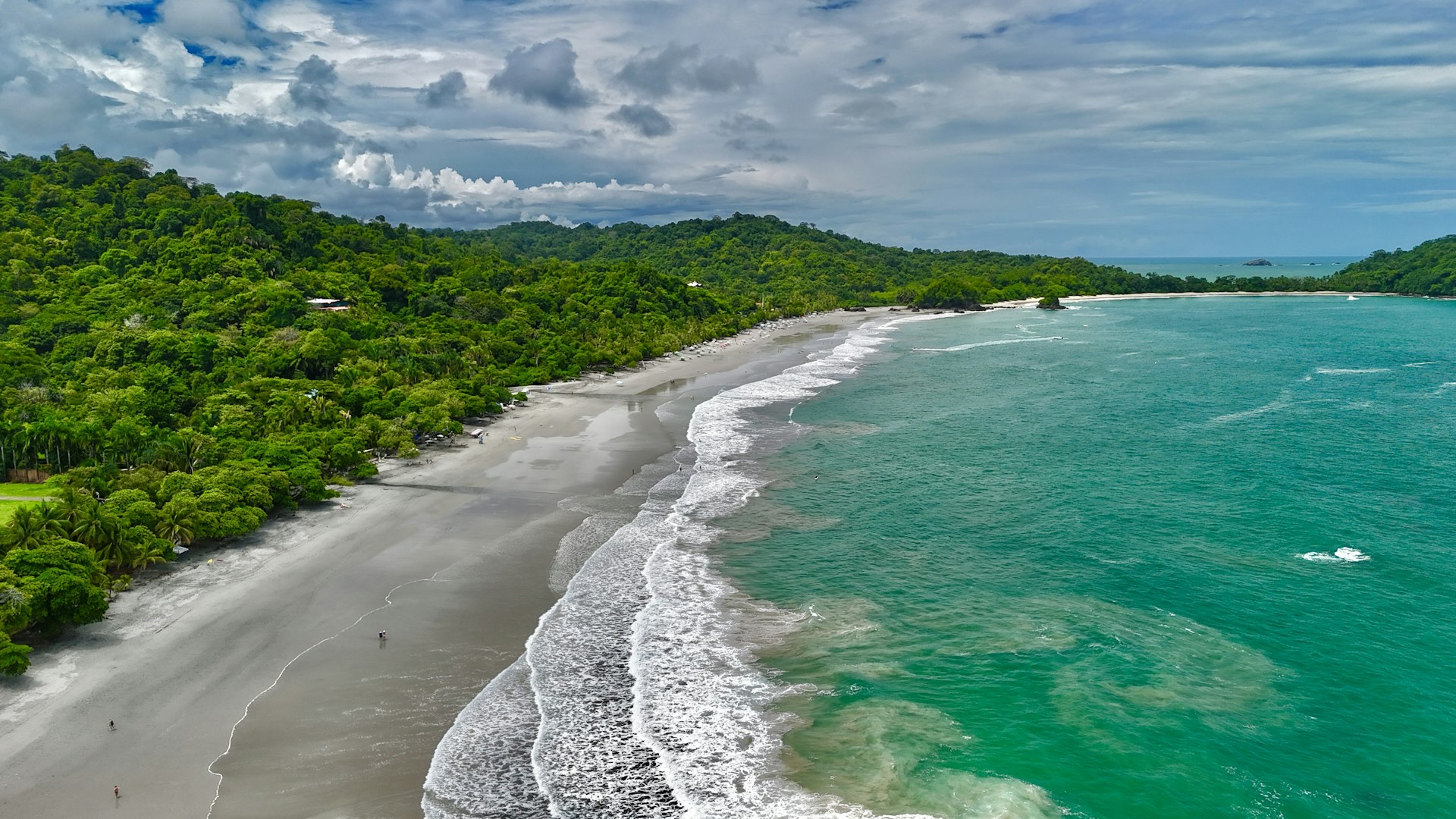
"Can I actually own a house on the beach here?" is one of the first questions I get from buyers in the US and Canada, usually right after they've walked the sand in Coco or Ocotal. The honest answer: it depends on which side of an invisible line the property sits, and whether the paperwork says title or concession. Here's how the Maritime Zone works in plain language, so you know what to ask before you fall in love with a view.
A quick note: I'm a real estate agent, not an attorney. This is a practical overview, not legal advice. Have an independent Costa Rican attorney review any property near the coast.
The 200 Meters: Public Zone and Restricted Zone
Costa Rica's Ley sobre la Zona Marítimo Terrestre (Law 6043, passed in 1977) makes a 200-meter strip along both coasts State property that can't be sold or acquired through possession. It's measured horizontally inland from the ordinary high-tide line and split in two:
- The public zone (first 50 meters): open to everyone. Nobody can own it, occupy it, or claim rights over it, with very narrow legal exceptions. Mangroves and estuaries count as public zone no matter how wide they are.
- The restricted zone (the next 150 meters): still State land, managed by the local municipality, which can grant private parties a concession to use and build on a defined parcel under strict conditions.
Past the 200-meter mark, you're generally back to normal titled land, which foreigners can own outright with the same rights as Costa Ricans.
Titled Land vs. Concession Land
Titled property (propiedad inscrita) is what most buyers picture: you own the land, it's registered at the Registro Nacional, and you can sell it, rent it, or leave it to your heirs. Nationality doesn't matter.
Concession property is closer to a long-term, renewable right to use State land. You hold rights under the concession contract, including the right to use what you build under it, but you never own the ground itself. It has an expiry date and an annual fee, is tied to an approved use, and can't be transferred or pledged without government sign-off.
One wrinkle: the law doesn't apply to properties legitimately titled in private hands under earlier law, or to certain coastal urban areas, so some titled parcels do exist inside the 200 meters. They're the exception, and I want the attorney to confirm the title's history holds up, not just that a title number exists.
Who Grants Concessions, and Why the Plan Regulador Matters
Only the municipality with jurisdiction over that stretch of coast can grant a concession in the restricted zone. In areas declared for tourism, the Instituto Costarricense de Turismo (ICT) must approve it, and the ICT also oversees the zone nationally. Once approved, the concession contract has to be recorded in the Registro General de Concesiones at the Registro Nacional; under the regulations, the contract doesn't take legal effect until it's registered.
Just as important, the law says municipalities can't grant concessions in tourist zones until a coastal development plan, the plan regulador costero, has been approved. It zones each parcel and sets lot sizes, density, and height. No approved plan, no valid new concession.
Locally, the Municipality of Carrillo manages the coast from Playa Panamá down through Hermosa, Coco, and Ocotal. Its integrated regulatory plan for Playa Hermosa, El Coco, and Bahía Azul was adopted in 2016, and Playa Ocotal has its own coastal plan on file with the ICT. Still, a plan in the area doesn't mean every beachfront structure you see has a valid, registered concession behind it.
The Rules That Limit Foreign Concession Holders
This is where most foreign buyers get caught. Article 47 of Law 6043 says concessions can't be granted:
- to foreigners who haven't resided in Costa Rica for at least five years (the regulations require five continuous years, certified by Immigration);
- to companies with bearer shares, or companies domiciled abroad;
- to entities set up in Costa Rica by foreigners; or
- to entities more than 50% owned by foreigners.
You'll often hear this described as a "49/51 rule," and in practice that's how most attorneys structure it: Costa Rican shareholders hold at least 51%, and the foreign buyer holds 49% or less. Just as important, a company that holds a concession can't transfer shares to foreigners, and the law says such transfers have no validity. And with Costa Rica's beneficial-ownership registry, "nominee" arrangements where a Costa Rican friend holds shares on paper carry real legal risk. If you're weighing a company structure in general, my post on buying in a corporation vs. your personal name covers the broader trade-offs.
Term, Renewal, and the Canon
By law, a concession runs for no less than 5 and no more than 20 years. It can be renewed successively, but renewal isn't automatic: the holder has to request it, be current on fees and obligations, and the municipality and ICT have to approve it. Renewal can be refused for reasons of public interest, if the parcel is needed for an approved plan, or for non-compliance.
Instead of the regular property tax, a concession holder pays an annual canon to the municipality. It's calculated as a percentage of the municipality's appraisal of the land (not the house): the regulations cap it at up to 3% a year for residential use and up to 4% for hotel, tourism, or recreational use. Unpaid canon is grounds for cancelling a concession. For how normal titled property is taxed, see my guide to Costa Rica property taxes.
What You Can't Do in the Public Zone
The first 50 meters is dedicated to public use and free transit. Outside of limited authorized exceptions, that means no private building, no fencing or walls that block passage, no cutting trees or extracting materials, and no "private beach." Concessions in the restricted zone also can't cut off public access to the beach. Unauthorized structures can be ordered demolished at the owner's cost, and building in violation of the law carries criminal penalties. If a terrace, pool, or wall sits very close to the sand, that's a question for the surveyor before it's a question about price.
How to Tell If a Property Is Titled or Concession
- Ask for the folio real (registry number) and have your attorney pull it at the Registro Nacional. Concessions sit in a separate concessions registry, and their numbers typically carry a "Z" (for example, 1234-Z-000).
- Review the plano catastrado (registered survey). A survey near the coast should show where the parcel sits relative to the high-tide line and the public-zone markers (mojones) set by the National Geographic Institute.
- If it's a concession, get a copy of the concession contract: holder, approved use, expiry date, and the current canon.
- Confirm the parcel's zoning in the plan regulador matches how you want to use it (full-time home, vacation rental, business).
- Get written confirmation from the municipality that the canon is paid up and there are no open proceedings.
- Check whether you (or your company) would actually qualify to hold it, and how the transfer would be approved.
The Practical Risks I Watch For
- "Rights" sales with no registered concession. Someone offers to sell you their derechos to a beach lot they've occupied for years. Land in the zone can't be acquired through possession, and without a registered concession you may be paying for something the law doesn't recognize.
- No approved plan regulador. Where there's no plan, the municipality generally can't grant new concessions, so an "application in process" isn't the same as a concession.
- Unapproved transfers. Transferring or pledging a concession without municipal and ICT authorization is void by law. A private sale contract alone doesn't cut it.
- Financing and estate planning. Many lenders won't lend on concession property, and any lien needs government approval. Ask your attorney how succession would work if your heirs are foreigners who don't meet the residency requirement.
None of this makes concession property a bad buy. For qualified buyers with a clean, registered, well-structured concession, it can be a great way to be right on the water. It just needs more homework, which is part of what the notario and your own attorney are for, and it's one of the reasons I think having your own buyer's agent matters on the coast. If you're interviewing agents, "Is this titled or concession, and how do you know?" belongs on your list of questions to ask a Costa Rica realtor.
What This Means in Coco, Ocotal, and Hermosa
In my part of Guanacaste, much of what buyers look at is titled: homes and condos in town or up the hillsides, often a short walk from the sand. If you want to be right on the beach, the closer a property sits to the high-tide line, the more carefully the paperwork needs checking, so budget for that due diligence alongside your closing costs. You can browse what's on the market now in my featured listings, from condos in Playas del Coco like Bromelias 5 and Tucanes 5 to an oceanfront home in Playa Ocotal. For any of them, I'll help you get the registry status confirmed before you get attached. Still choosing a beach? Start with my guide to white-sand beaches on the Pacific coast.
Frequently Asked Questions
Can a foreigner own beachfront property in Costa Rica?
Foreigners can own titled property anywhere in Costa Rica, including near the beach. But most land within 200 meters of the ordinary high-tide line is the Maritime Zone: the first 50 meters is public and can't be owned by anyone, and the next 150 meters is usually held through a municipal concession, which foreigners can only hold directly after at least five years of residency.
What is the difference between titled and concession property in Costa Rica?
Titled property is land you own outright, registered in your name at the Registro Nacional, with no nationality restrictions. Concession property is State land in the Maritime Zone's restricted zone that a municipality lets you use for a set term of 5 to 20 years, renewable, in exchange for an annual fee called the canon.
Can a foreigner hold a Maritime Zone concession through a Costa Rican corporation?
Only if the company isn't more than 50% foreign-owned. Law 6043 bars concessions for entities that are more than 50% owned by foreigners, set up by foreigners, domiciled abroad, or with bearer shares, and a concession-holding company can't transfer shares to foreigners. In practice, attorneys usually structure it with at least 51% Costa Rican ownership. Have an independent attorney review any structure.
How long does a Maritime Zone concession last?
A concession is granted for no less than 5 and no more than 20 years. It can be renewed successively if the holder requests it, is current on the canon and other obligations, and the municipality and the ICT approve, but renewal isn't guaranteed.
How do I know if a property is in the Maritime Zone?
Have your attorney check the property's registry number at the Registro Nacional, since concessions are recorded in a separate concessions registry and their numbers typically include a "Z." Then review the plano catastrado (registered survey), which should show the parcel's position relative to the high-tide line and the public-zone markers.