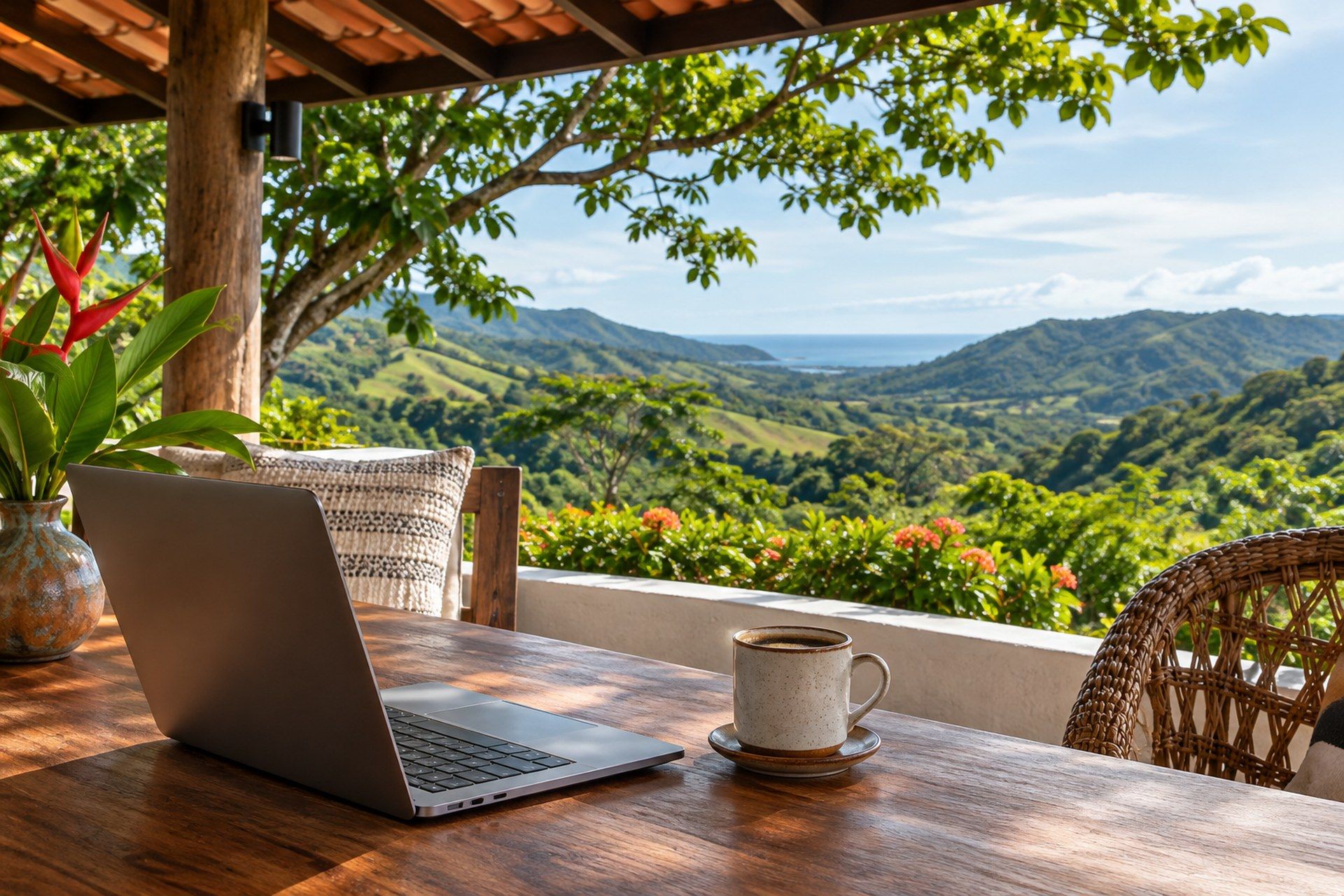
Costa Rica has a dedicated stay category for people who work remotely for employers or clients outside the country. It's often called the digital nomad visa. If you're thinking about living in Guanacaste for a year or two before you decide whether to buy, it's worth understanding what the category covers, what it doesn't, and what working from here looks like day to day.
One caveat up front: I'm a real estate agent, not an immigration attorney. The figures below come from published summaries of the law and they can change, so treat them as a starting point and confirm them with Migración or an immigration lawyer before you apply.
What the Remote Worker Stay Is
Law 10008 created a category for remote workers and international service providers: employees, freelancers and business owners whose income comes from outside Costa Rica. It is a temporary stay, not residency. As it is commonly described, it is granted for one year and can be renewed once for a second year, so the maximum is about two years.
The income has to come from abroad. This stay does not allow you to take paid work from Costa Rican employers or clients. The category exists so that people who live here while working for foreign clients have a clear legal footing, rather than relying on a tourist stay that was designed for visiting.
The Requirements, as Commonly Described
- Income: about $3,000 a month for an individual, or about $4,000 a month when applying with family members.
- Proof of income: bank statements (twelve months is commonly cited), plus an employment letter or client contracts.
- Health insurance: a policy valid in Costa Rica for the whole stay, covering every family member on the application. A minimum coverage amount applies, so confirm the current figure before you buy a policy.
- Documents: a valid passport, the application form, and a certified translation of any document that isn't in Spanish.
- Fees: a government fee deposit (reported as $100) and a document fee when the stay is granted (reported as around $90), plus your own costs for translation and insurance.
- How to apply: online through the Trámite Ya platform, or in person at an immigration office with an appointment.
- Renewal: you apply again with fresh proof, and you are expected to have spent a minimum amount of time in the country during the first year (some summaries say 180 days).
Holders are also described as exempt from Costa Rican income tax on foreign-sourced income during the stay, and as able to bring in personal work equipment, such as a laptop and phone, without import duties. Neither point changes what you owe at home. U.S. citizens, for example, still file in the U.S., so talk to your accountant about the combined picture.
What It Doesn't Give You
Time on a remote worker stay doesn't count toward residency, and it doesn't give you the right to work locally. If you decide to stay long term, the usual routes are pensionado, rentista, or inversionista, which comes with buying real estate. For the basics of how long a visitor can stay without any of these, see how long a Canadian can stay in Costa Rica.
Internet in Guanacaste: Check It at the Exact Address
For a remote worker, internet matters more than the view. It also varies by street, not just by town. In and around Playas del Coco, many addresses can get fiber from one or more providers, while some outlying addresses rely on other connections. Satellite internet such as Starlink has been available in Costa Rica since 2023 and is popular as a primary or backup connection where fiber is limited. Because the answer changes from one building to the next, ask about the specific address and test it yourself.
Remote Work Setup Checklist
- Ask the owner or the administradora which internet providers serve the exact address, and run a speed test during your visit.
- Ask neighbors in the building or on the street which provider they use and how often it drops.
- Plan a backup: a second provider, a mobile data plan, or a satellite connection.
- Plan for power outages, which can happen during rainy-season storms. A small battery backup for your router and computer helps.
- Look for a quiet room that can serve as an office, and for air conditioning if you'll work through the midday heat.
- If you're renting, confirm that internet is included or that you're allowed to install your own.
- Confirm your health insurance meets the visa's requirements before you apply.
- Confirm the current requirements and fees with Migración or an immigration lawyer.
Rent First, Then Decide Whether to Buy
For many remote workers, the best way to find out whether Guanacaste suits them is to live here for a season. Rent a furnished place for a few months, work from it, and see how the internet, the heat, the town and the pace of life hold up. Renting vs. buying in Guanacaste compares the two paths, and cost of living in Playas del Coco gives realistic monthly budgets. If you do decide to buy, moving to Costa Rica: what expats need to know covers the practical side of settling in.
Frequently Asked Questions
How much do I need to earn for the Costa Rica remote worker visa?
As commonly described, about $3,000 a month for one person, or about $4,000 a month when applying with family. You prove it with bank statements and supporting documents such as an employment letter or client contracts. Requirements can change, so confirm the current amounts with Migración or an immigration lawyer.
Does the remote worker visa lead to residency?
No. It is a temporary stay, granted for one year and renewable once, so about two years in total. Time on it doesn't count toward residency. If you want to stay longer, you would look at a residency category such as pensionado, rentista or inversionista.
Can I work for a Costa Rican company on this visa?
No. The category is for people whose income comes from outside Costa Rica. It does not allow you to take paid work from local employers or clients.
Do I pay Costa Rican income tax on my foreign income?
Published summaries describe holders as exempt from Costa Rican income tax on foreign-sourced income during the stay. That doesn't change your obligations in your home country. Ask an accountant who understands both systems.
Is the internet in Playas del Coco good enough for video calls?
Often yes, but it depends on the exact address. Many addresses can get fiber, while others rely on different connections, and Starlink is a common backup. Ask which providers serve the property, run a speed test during your visit, and plan a backup connection.