Owners of Guanacaste property ask me the same handful of questions before they sell: what will it cost, how much tax will I owe, and how long will it take? The answers are more manageable than most people expect, but the tax part depends on details that are specific to you. This guide walks through each piece so you can plan before you list.
What It Costs to Sell
- Real estate commission. Negotiable, and normally paid by the seller. Quoted rates vary widely by broker and property type, from a few percent for homes to as much as about 10% for land. Agree the rate, and what it covers, in writing.
- Capital gains tax. 15% on your gain, unless an exemption or the 2.25% option applies. Details below.
- Transfer costs. The transfer tax, registry stamps and notary fees add up to a few percent of the price. By custom the buyer usually pays these, but it is negotiable in the contract. See my closing cost breakdown.
- Being current on taxes and fees. Your municipal property tax and any HOA or condo fees need to be paid up before the transfer. See what owners pay each year.
- Company taxes, if it applies. If the property is held in a Costa Rican company, its annual corporate tax and filings need to be current.
Capital Gains Tax in Costa Rica
Since July 2019, Costa Rica taxes capital gains on real estate at 15%. The gain is generally the sale price minus your acquisition price, plus documented improvements, less acquisition expenses and taxes. The acquisition price can be updated by an inflation index. Keep your purchase deed, receipts for improvements and closing documents; the better your paper trail, the lower your taxable gain.
The 2.25% option. If you acquired the property before July 2019, you may be able to choose a tax of 2.25% of the sale price instead of 15% of the gain. It is generally described as a one-time choice for property not tied to a business, so ask your accountant whether it is available to you and which route is cheaper. Which one wins depends on your purchase price and how much the property has gained.
Your habitual home is exempt. A property that is your habitual residence is exempt from the tax. A vacation home, a rental or a lot does not get that exemption.
A simplified example (not a quote, and ignoring inflation adjustments and expenses): you bought for $300,000, spent $20,000 on documented improvements and sell for $400,000. Your gain is $80,000, so the tax at 15% is $12,000. For a property bought in 2016 for $150,000 and sold at $400,000, 15% of a $250,000 gain would be $37,500, while 2.25% of the sale price would be $9,000. That difference is why it is worth calculating both routes.
If you are not a resident. The buyer generally withholds 2.5% of the total sale price on a non-resident seller and pays it to the tax authority; the transfer cannot be registered until that is paid. How the withholding is treated against your final tax has changed over time, so have your accountant confirm it before you sign. The tax is due in the first 15 days of the month after the sale.
If the Property Is Held in a Company
Selling the shares of a company that owns the property is also treated as a capital gains event, and buyers will do due diligence on the company as well as the property. It is not a way around the tax. I cover the trade-offs in buying in a corporation versus your own name.
Documents to Have Ready
- The title (finca) certification from the Registro Nacional
- The registered survey plan (plano catastrado)
- Proof that municipal taxes are current, and utility receipts
- HOA or condo bylaws, and proof your fees are current
- Your original purchase deed and receipts for improvements, to support your cost basis
- A list of what is included in the sale, such as furniture and appliances
- For a company: the current legal-entity certificate (personería jurídica), the share registry and the corporate books
The Sale, Step by Step
- Price it. I price properties based on recent comparable sales, not wishful thinking.
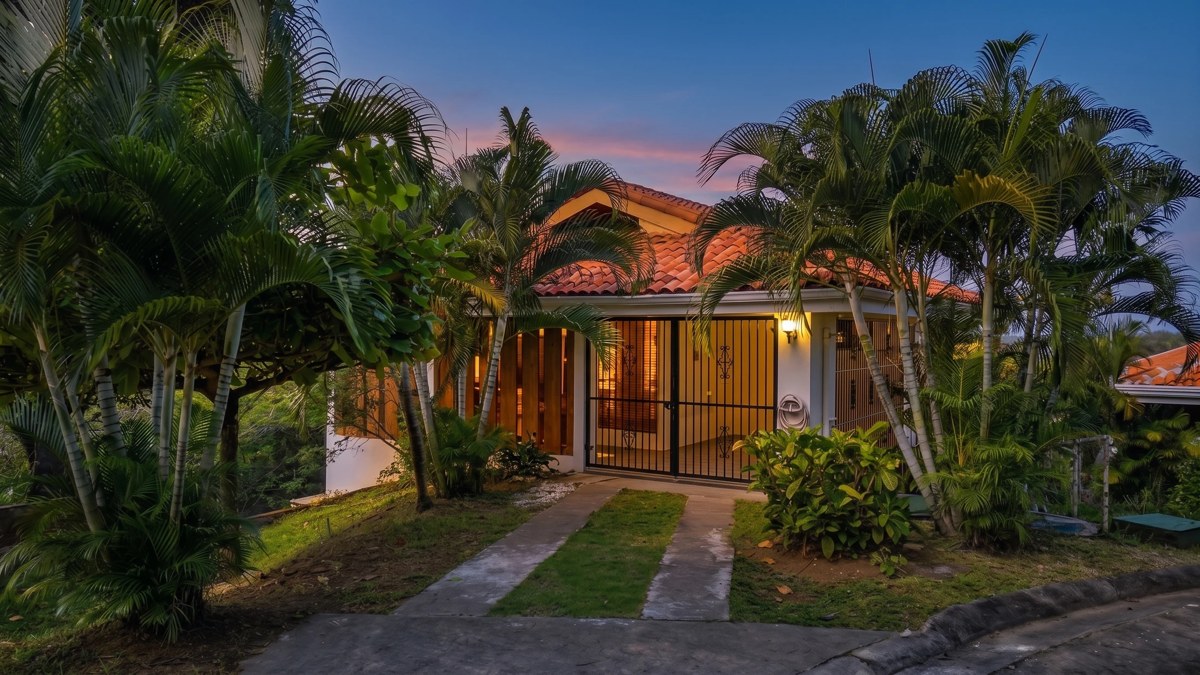
- Prepare and photograph. Every home I list gets professional interior, exterior, drone and twilight photography at no extra cost. A well-presented listing sells faster. See my photography services.
- List and show. Your property is distributed across the channels buyers actually use.
- Accept an offer. Once you agree on price and terms, a purchase agreement is signed and the buyer's deposit, often around 10%, goes into escrow.
- Due diligence. The buyer's attorney verifies the title, taxes and documents.
- Sign the deed. The deed is signed before a notario público. See what a notario público actually does.
- Register and get paid. The transfer is registered at the Registro Nacional and the funds are released.
From an accepted offer to closing is commonly around 30 to 45 days, depending on due diligence and whether the buyer is paying cash. How long it takes to find the right buyer varies with price, location and condition, so ask me for current comparable listings and sales.
Taxes at Home for US and Canadian Sellers
- US sellers. A gain on property held more than a year is generally a long-term capital gain. The home-sale exclusion of up to $250,000 ($500,000 for joint filers) applies only to your main home. A credit for foreign income taxes paid may be available on Form 1116. You cannot use a 1031 exchange between a US property and a Costa Rican one. See my guide to buying in Costa Rica as a US citizen.
- Canadian sellers. The government cancelled the proposed increase to the capital gains inclusion rate in March 2025, so the rate stays at 50%. A property outside Canada can be designated as your principal residence in some cases, and the gain must be reported in Canadian dollars. See tax on Costa Rica rental income for Canadians.
Neither of these replaces advice from a cross-border accountant who knows your full situation.
Getting Your Money Out
Have your deed and closing documents ready when the proceeds arrive, since banks typically ask about the source of large incoming wires. Speak to your bank and your accountant before closing so you know what they will need.
Myths About Selling in Costa Rica
- "Costa Rica has no capital gains tax." It has applied since July 2019.
- "Selling shares avoids the tax." Capital gains tax still applies to a sale of shares.
- "The 2.25% is automatic." It is an option for property acquired before July 2019, not the default.
- "The commission is set by law." It is negotiable.
Frequently Asked Questions
Is there a capital gains tax when I sell property in Costa Rica?
Yes. Since July 2019, gains on the sale of real estate are taxed at 15%, calculated on the sale price minus your documented purchase price and improvements. There is an exemption for a habitual residence, and a one-time option of 2.25% of the sale price for property bought before July 2019.
Do I pay capital gains tax on my vacation home or rental?
Generally yes. The habitual residence exemption covers the home you actually live in, not a vacation home, a rental or a lot.
Who pays the real estate commission when selling?
The seller normally pays it, and it is negotiable. Quoted rates vary by broker and by property type, from a few percent for homes to as much as about 10% for land, so agree the rate and what it includes in writing.
How long does a sale take once I have an accepted offer?
Commonly around 30 to 45 days from an accepted offer to closing, depending on due diligence and whether the buyer is paying cash. The buyer typically puts an earnest-money deposit, often around 10%, into escrow.
What happens if I am not a Costa Rican resident?
The buyer generally withholds 2.5% of the total sale price on a non-resident seller's behalf and pays it to the tax authority. How that withholding interacts with your final tax has changed over time, so confirm it with your accountant before you sign.
What if my property is held in a company?
Selling the shares of a company that owns the property is also a taxable capital gains event, and the buyer will want to do due diligence on the company itself. I explain the trade-offs in my post on a corporation versus your own name.